ELECTRIC VEHICLE • STRUCTURAL DESIGN • CASTING
Electric Vehicle Battery Enclosure
Developed a cast A356 aluminum enclosure that repositioned 74 pounds of batteries beneath an electric racing vehicle’s frame, lowering its center of gravity and improving vehicle stability.
THE PROBLEM
Reducing the vehicle’s center of gravity
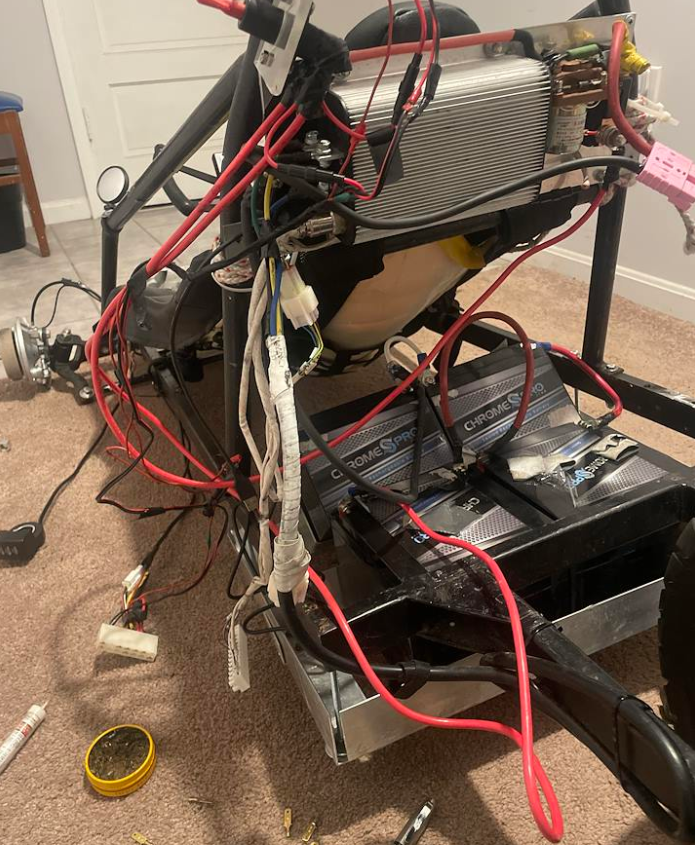
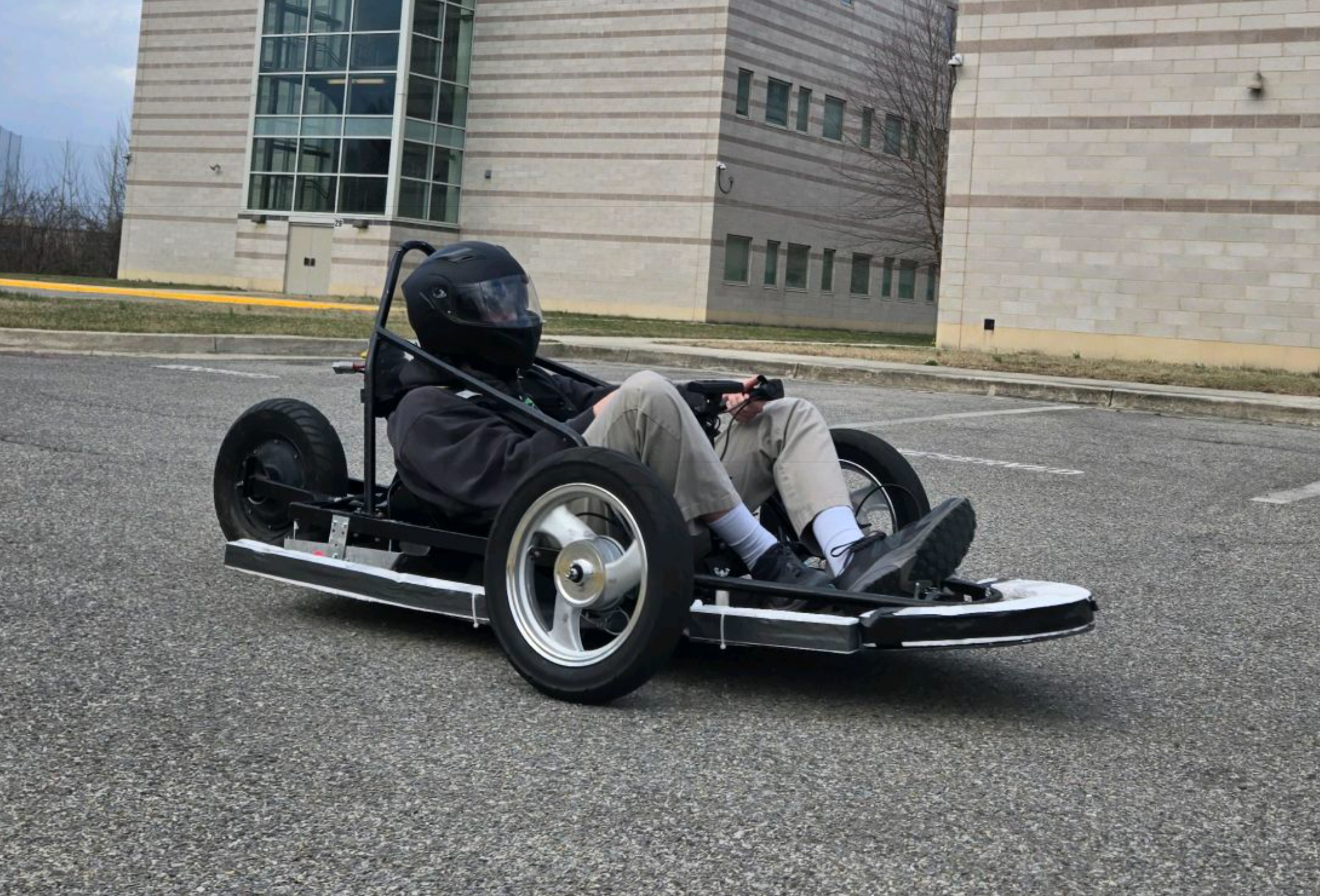
Our electric vehicle frequently rolled over because its batteries were mounted high in the chassis, raising the vehicle’s center of gravity.
With only two weeks remaining before an international race in Dubai, our team needed an affordable and lightweight enclosure that could safely support the battery pack beneath the frame.
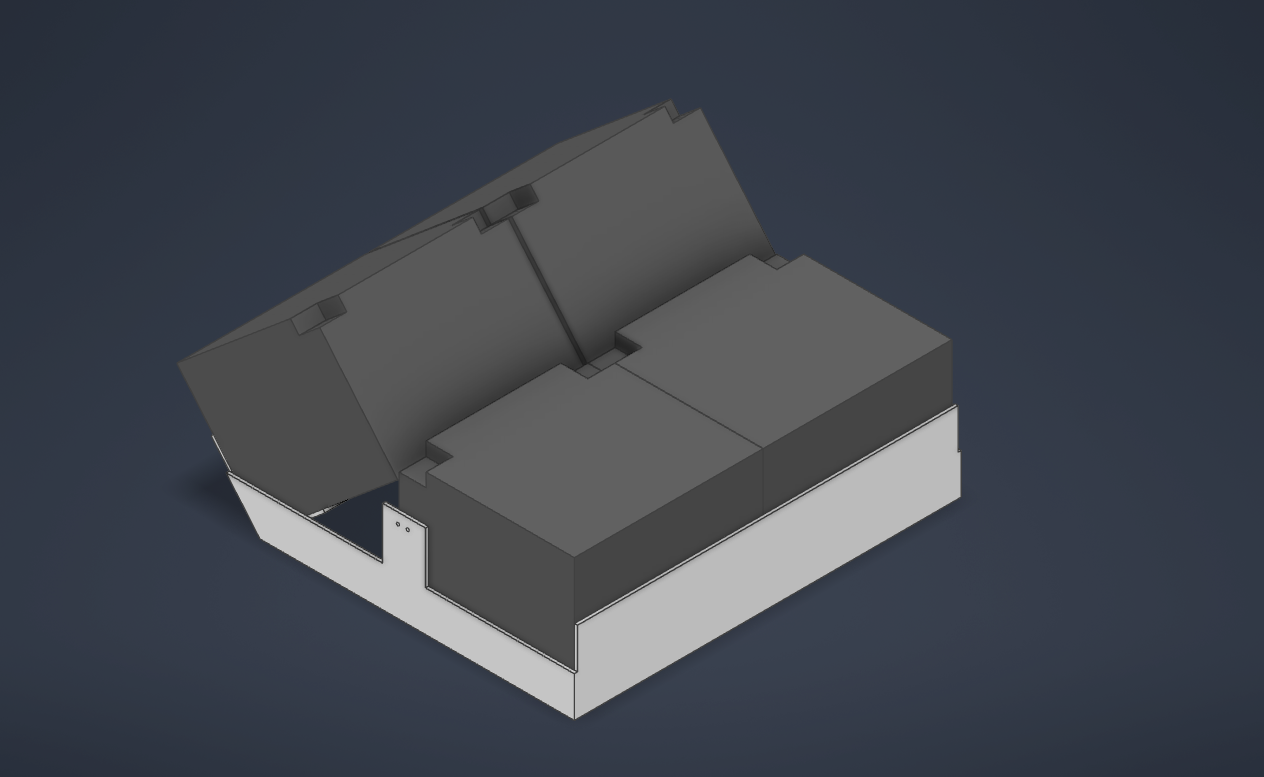
The enclosure needed to support 74 pounds of batteries, withstand vehicle loads, provide secure mounting points, and be manufactured using the materials and equipment available to us.
PROTOTYPING
Collecting real loading data
We first fabricated a sheet-metal prototype equipped with a load cell connected to an ESP32 through a signal amplifier.
The prototype allowed us to gather loading data and better understand the forces experienced by the enclosure and its mounting points during operation.
STRUCTURAL ANALYSIS
Using test data to improve the design
The collected data was used to define realistic loading conditions for an ANSYS structural simulation.
The analysis helped us identify high-stress regions, reinforce critical mounting points, and remove unnecessary material from lower-stress areas. This produced a lighter and stronger cast-aluminum design.
MANUFACTURING
Sand casting the enclosure
We 3D-printed a full-scale pattern and used oil-bonded sand to produce the casting mold. Scrap A356 aluminum was melted in a homemade brick furnace and poured into the completed mold.
After the casting cooled, we removed the enclosure from the mold, cleaned the surface, and completed the mounting features needed to install it beneath the vehicle.
RESULTS
Improved stability and reduced mass
The completed enclosure repositioned the battery pack beneath the frame, lowering the vehicle’s center of gravity and improving its stability while cornering.
Integrating the enclosure into the lower vehicle structure contributed to a 32.5-pound reduction in total vehicle mass. The project demonstrated how physical testing, embedded data collection, simulation, and manufacturing could be combined under a short development timeline.